

Factory & Warehouse Security UK
Protect entrances, loading areas, stock zones and site boundaries with a coordinated security plan built for the way your facility operates.
- Access and gatehouse control
- Patrol and perimeter checks
- Alarm escalation support
- Clear incident records
Your security plan should follow the flow of the site
Factories and warehouses are rarely static. Employees arrive for different shifts, contractors need temporary access, vehicles queue at loading bays, and valuable goods move between secure and public-facing areas.
AA1FORT can combine guarding, access procedures, patrols and response arrangements around those movements. The aim is not simply to add a visible presence. It is to give every post a defined purpose, every exception a reporting route, and site management a clearer record of what happened.
Turn pressure points into controlled points
A strong plan considers normal activity, out-of-hours conditions and the moments when responsibility changes hands.
Unverified access
Employees, visitors and contractors need a consistent sign-in, identification and authorisation process.
Delivery movement
Busy loading areas can create uncertainty around vehicles, drivers, documents and restricted routes.
High-value zones
Inventory, tools, raw materials and finished goods may require tighter access and more frequent checks.
Perimeter exposure
Fencing, yards, car parks, outbuildings and poorly observed boundaries can attract trespass or damage.
Out-of-hours activity
Lower staffing levels, lone workers and shutdown periods change how incidents are noticed and escalated.
Alarm and incident response
Without named contacts and clear instructions, a detected problem can still lead to a slow or inconsistent response.
Build the service around each zone and duty
Choose individual services or combine them through one site deployment plan.
Manned guarding
Fixed posts and visible patrol support for entrances, buildings, yards and sensitive areas during agreed operating windows.
Gatehouse and access control
Identity checks, visitor records, pass procedures and controlled entry for staff, contractors and authorised guests.
Vehicle and delivery checks
Support for delivery documentation, driver instructions, approved routes, loading access and vehicle movement records.
Mobile and foot patrols
Scheduled or varied checks of doors, fencing, car parks, external compounds and other agreed patrol points.
CCTV observation support
Observation and escalation procedures that connect camera activity with on-site contacts or an agreed response route.
Keyholding and alarm response
Secure key arrangements and site-specific instructions for attendance, inspection, escalation and handover after an activation.
Locking and unlocking
Consistent opening and closing checks covering agreed doors, windows, alarm status and signs of damage or intrusion.
Perimeter and yard security
Boundary checks, gate oversight and visible coverage for external storage, trailers, plant and isolated site areas.
Incident logging and handover
Clear records of exceptions, refusals, damage, alarms and actions taken, followed by handover to the nominated site contact.
Security duties connected to daily operations
Each service should have clear instructions, defined boundaries and a named escalation route. These examples show what that means in practice.
Manned guarding, gatehouse and access control
A guarding post can act as the controlled point between public access and operational areas. The officer follows your approved process for staff, visitors, contractors and drivers rather than making access decisions without site guidance.
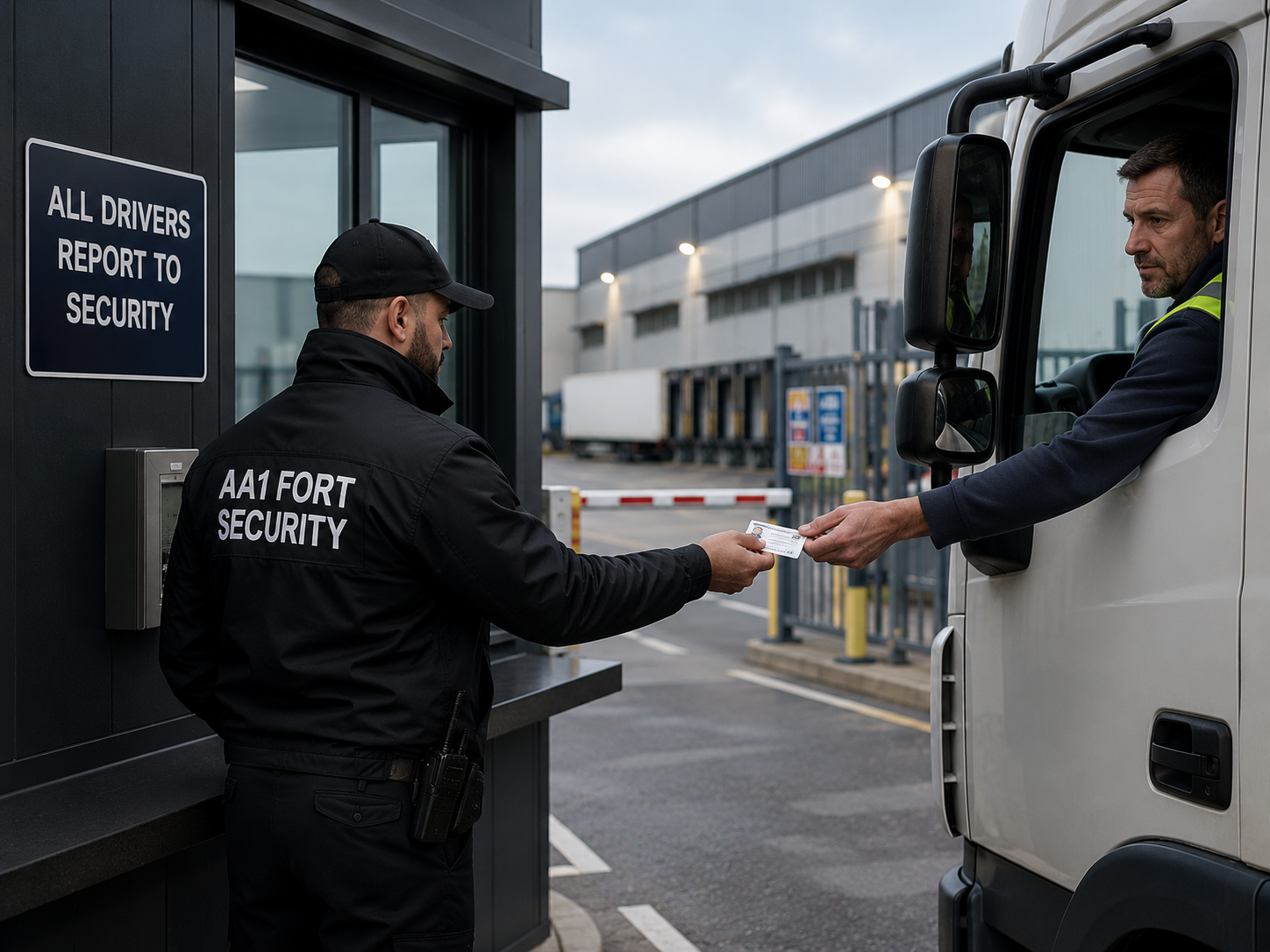
At a gatehouse, this may include checking identification, confirming appointments, issuing passes, recording arrivals and contacting the relevant department when an unexpected visitor or delivery arrives.
- Visitor and contractor records
- Pass and identification checks
- Delivery-document verification
- Restricted-area instructions
- Shift and post handovers
Patrols, perimeter checks and CCTV support
Patrols extend coverage beyond a reception desk or main gate. Routes can include external fencing, fire exits, car parks, storage compounds, loading bays, plant areas and agreed internal checkpoints.
CCTV observation can support those patrols by directing attention to unusual movement or a specific area. The site instructions should explain what the observer records, who is contacted and when an officer should attend.
- Scheduled or varied patrol routes
- Door, fence and gate observations
- External yard and car-park checks
- Camera-to-response procedures
- Recorded exceptions and damage
Keyholding, alarm attendance and incident reporting
Keyholding removes the need for an employee to carry site keys or attend an alarm alone. The response is guided by agreed instructions covering access, inspection limits, emergency contacts and the conditions for involving the police, fire service or another specialist.
After attendance, a useful report should state what triggered the visit, what was observed, which areas were checked, who was contacted and how the premises were left.
- Controlled key-management process
- Site-specific alarm instructions
- Named escalation contacts
- Opening and closing checks
- Incident report and handover
 One plan.
Multiple site types.
Coverage shaped to the industrial environment
Factories
Production areas, shift entrances, machinery zones and shutdown procedures.
Warehouses
Stock locations, picking areas, loading bays and staff or visitor access.
Distribution centres
High vehicle turnover, driver control, dispatch areas and extended operating hours.
Logistics hubs
Multiple carriers, trailer areas, timed access and busy pedestrian-vehicle interfaces.
Manufacturing plants
Contractor procedures, restricted processes, external compounds and safety boundaries.
Storage yards
Perimeter exposure, outdoor assets, gates, outbuildings and out-of-hours checks.
Decide what happens at each layer
Technology, personnel and site procedures work well when the handoff between them is defined.
| Layer | Typical control | Question to answer |
|---|---|---|
| Boundary | Perimeter checks and patrol routes | How is damage or trespass reported? |
| Entrance | Gatehouse, passes and visitor records | Who can approve an exception? |
| Operational area | Restricted zones and observation | Which people need access, and when? |
| Out of hours | Locking, patrols and alarm instructions | Who receives the first escalation? |
| Management | Logs, incident reports and review | What information supports the next decision? |
A security service with defined stages
The final deployment should reflect the actual site, not a generic guard schedule.
- 01
Operational brief
Confirm activities, working hours, key contacts, known concerns and desired outcomes.
- 02
Site assessment
Review entrances, boundaries, high-value zones, patrol points and response constraints.
- 03
Security plan
Define roles, post instructions, escalation routes, records and shift handovers.
- 04
Mobilisation
Brief assigned personnel on the site rules, communication process and priorities.
- 05
Review
Use reports, incidents and operational feedback to adjust the service where needed.
Questions to resolve before deployment
For a useful recommendation, send us the site layout, operating hours and the areas that concern you most.

What does factory and warehouse security normally include?
It may combine guarding, gatehouse procedures, contractor and visitor checks, vehicle control, patrols, CCTV observation, keyholding, alarm attendance and incident reporting. The correct mix depends on the layout, assets and operating pattern.
How many security personnel does an industrial site need?
Site size alone does not determine staffing. The number of entrances, simultaneous duties, patrol distances, shift changes, lone-working conditions and required response times all affect the deployment.
Can security cover nights, weekends or shutdown periods?
Coverage can be scoped around the periods when your site needs it. Include setup, shutdown, maintenance and delivery windows in the brief, not only the main production or warehouse hours.
Can guards manage delivery and contractor access?
They can follow agreed procedures for identification, booking references, passes, vehicle routes and site contacts. Your authorisation rules and exception process should be documented before deployment.
Can patrols and CCTV be combined?
Yes. Camera observation can identify activity, while an on-site or mobile response follows the agreed escalation process. The plan should state who reviews the alert, who attends and who receives the report.
What information is needed for a security quote?
Share the address, facility type, operating hours, site plan, access points, required duties, delivery activity, current security measures and any recent incidents or known vulnerabilities.
Request a factory or warehouse security assessment
Tell AA1FORT how your facility operates and where you need stronger control.